A Homeowner’s Guide to Natural Stone Thin Veneer
Stone brings warmth, texture, and character to a home, but since traditional full-depth stone is not practical for every surface, many opt for natural stone veneer.
Natural stone veneer or natural thin stone veneer can give a home the authentic appearance and durability of quarried stone in a thinner, lighter format.
It can be used to transform fireplaces, kitchens, exterior façades, feature walls, and many other areas––but how is it made? How much does it cost? And where can it be used? In this guide, we’ll explain it all, plus how it compares with manufactured alternatives.
We’ll also cover its durability, environmental benefits, installation considerations, and what to look for when choosing stone for your project.
What Is Thin-Cut Natural Stone?
Natural thin stone veneer is real quarried stone that has been cut to reduce its thickness and weight. It is applied to the surface of an interior or exterior wall and helps to create the look of traditional masonry without requiring the same structural support as full-depth stone.
You will often see it used around fireplaces, on kitchen walls, across exterior façades, and anywhere a homeowner wants to introduce a more natural finish. Plus, because it works indoors and outside, it can carry the same material and character from one part of a property to another.
And the word “natural” is important. Although many products are sold as stone siding or veneer, not every option is made from real stone.
Stone Veneer, Natural vs Manufactured: Which is Best?
When comparing stone veneer, the biggest difference between natural and manufactured options is the material itself.
To begin, natural products are cut from quarried stone, while manufactured alternatives may be formed from molded concrete, epoxy resin, high-density polyurethane, or other materials designed to imitate stone.
And while those alternatives can cost less and may be faster to install, the surface does not always respond to wear in the same way. It’s quite common for manufactured products to chip, crack, dent, or even swell after absorbing water. Then, if a faux surface is damaged, the concrete aggregate or manufactured material beneath the finish may become visible. But when real stone is chipped, the exposed area is still stone, so the damage tends to be much less noticeable and easier to repair.
Some polyurethane products may also release volatile organic compounds, commonly called VOCs, into indoor air. For homeowners who care about the composition and longevity of the materials used in their home, it is worth knowing exactly what a veneer contains.
Natural Stone Handles Everyday Wear
Real stone was formed through natural geologic pressure over an immense period of time, so with that in mind, it is exceptionally strong and not easily dented by everyday bumps or impacts. In fact, an impact that could damage a manufactured veneer may be more likely to harm the object striking real stone than the wall itself.
And as mentioned, some imitation veneers can absorb moisture if a leak develops behind the installation, potentially causing swelling or deterioration. Most real stone is far less vulnerable to that type of damage. This durability is one of the reasons stone from structures built decades or even centuries ago can still be reclaimed and used again.
Thin Natural Stone Veneer is a Sustainable Building Material
Thin natural stone veneer can be a more environmentally conscious choice than products made from plastic or other non-recyclable materials, as it requires less material than full-depth stone, lasts as long as the building in many applications, and can often be reclaimed for future projects rather than discarded.
Natural stone also has a smaller manufacturing footprint than many concrete and polyurethane alternatives because the stone already exists in its finished material form. Sure, it still needs to be quarried, cut, and transported, but it doesn’t need to be manufactured from a combination of synthetic ingredients.
Plus, since quarries are generally regulated by state departments and commonly required to reclaim depleted areas once operations end, depending on the site, a former quarry may be converted into a lake or public park afterward.
How House of Rocks Makes Thin Stone Veneer
House of Rocks is a family-run business with more than 30 years of experience supplying natural stone for residential and commercial properties. We cut our veneer at our own facility, which allows us to oversee the process and offer custom blends suited to each project.
The process starts with large slabs of raw stone. We snap them into pieces approximately three to five inches deep to create Full Depth Stone Veneer––the traditional form of veneer found on many centuries-old buildings that remain standing today.
Modern construction often calls for a lighter product that can be applied to a wider range of surfaces. To make natural thin stone veneer we run the full-depth pieces through our saw and cut them to approximately 1.5 inches thick. The exact thickness can vary depending on the type and texture of the stone. Removing the excess depth significantly reduces the weight while preserving the natural face, strength, and variation of the original stone.
Where Can Thin Stone Veneer Be Used?
Because it is lighter than full-depth masonry, thin natural stone veneer is adaptable enough for many indoor and outdoor applications. It can transform most fireplaces, add texture to any kitchen, create a beautiful interior feature wall, or give an entire building exterior the permanence and character of real masonry work.
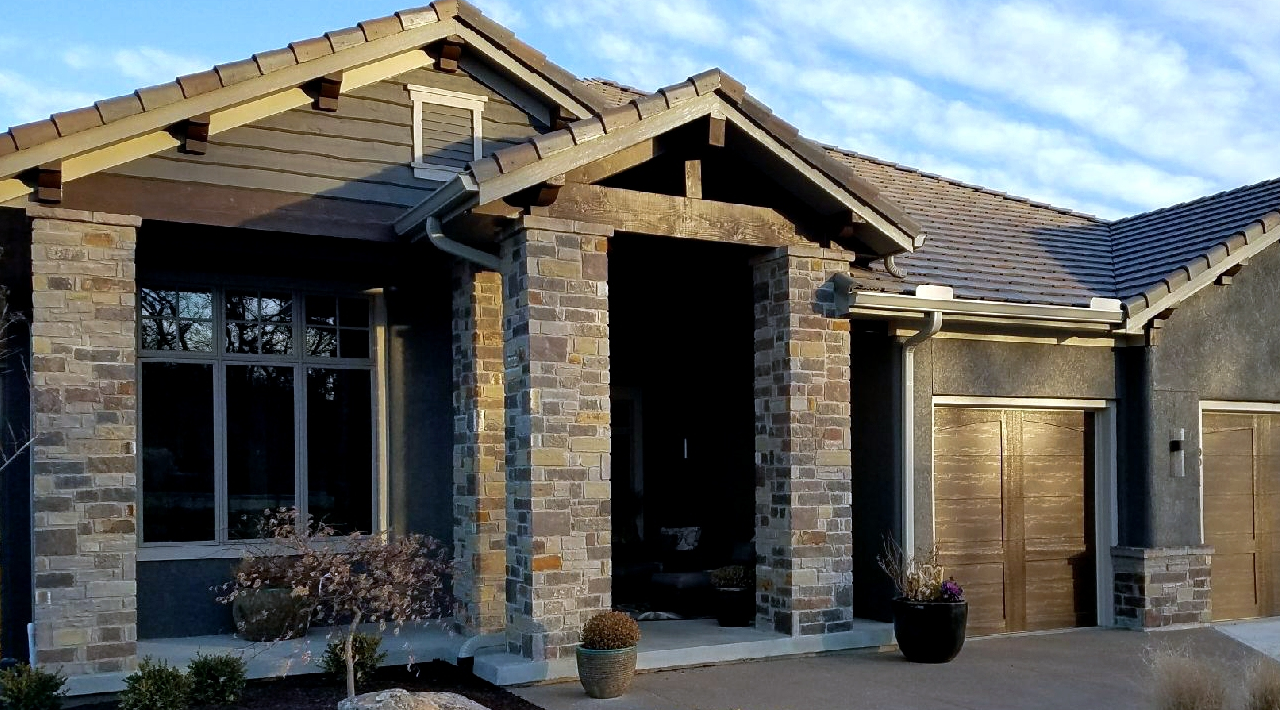
Using stone veneer for exterior walls is especially useful when you want the appearance of substantial stonework without placing the same weight on the structure. It can wrap façades and architectural features.
Find Natural Stone Veneer in Kansas City
If you are looking for natural stone veneer, Kansas City homeowners, contractors, and designers can view the House of Rocks collection in person. Seeing real stone up close makes it much easier to understand how much natural variation and depth it can bring to a project.
Whether you need stone veneer for exterior walls, an indoor fireplace surround, or a custom blend for a commercial property, our team can help you select an option that fits the space.
To ask about natural stone veneer, Kansas City projects, or browse our full range of stone products, visit House of Rocks, email info@houseofrocks.com, or call 913-432-5990.
Frequently Asked Questions
Does natural stone veneer require a foundation or brick ledge?
No, it doesn’t always. Natural stone veneer is much lighter than full-depth stone and can pretty often be installed without a dedicated foundation or brick ledge. However, the wall must still be properly prepared to support the veneer system
Can thin stone veneer be installed over existing brick?
Yes, thin stone veneer can typically be installed over structurally sound brick. The existing surface may just need to be cleaned or covered with an appropriate bonding layer before installation.
How long does natural thin stone veneer last?
When correctly installed and maintained, natural thin stone veneer can last for decades.
Does natural stone veneer need to be sealed?
Nope. Not every stone or application requires sealing. A breathable masonry sealer may help protect porous stone in areas exposed to moisture, grease, or frequent staining, but it is best to ask your stone supplier or installer first.
How do you clean thin natural stone veneer?
Remove loose dirt with a soft brush and clean the surface using water and a mild, stone-safe detergent. Avoid acidic cleaners, harsh chemicals, and high-pressure washing, though and they could damage the stone or mortar joints.